

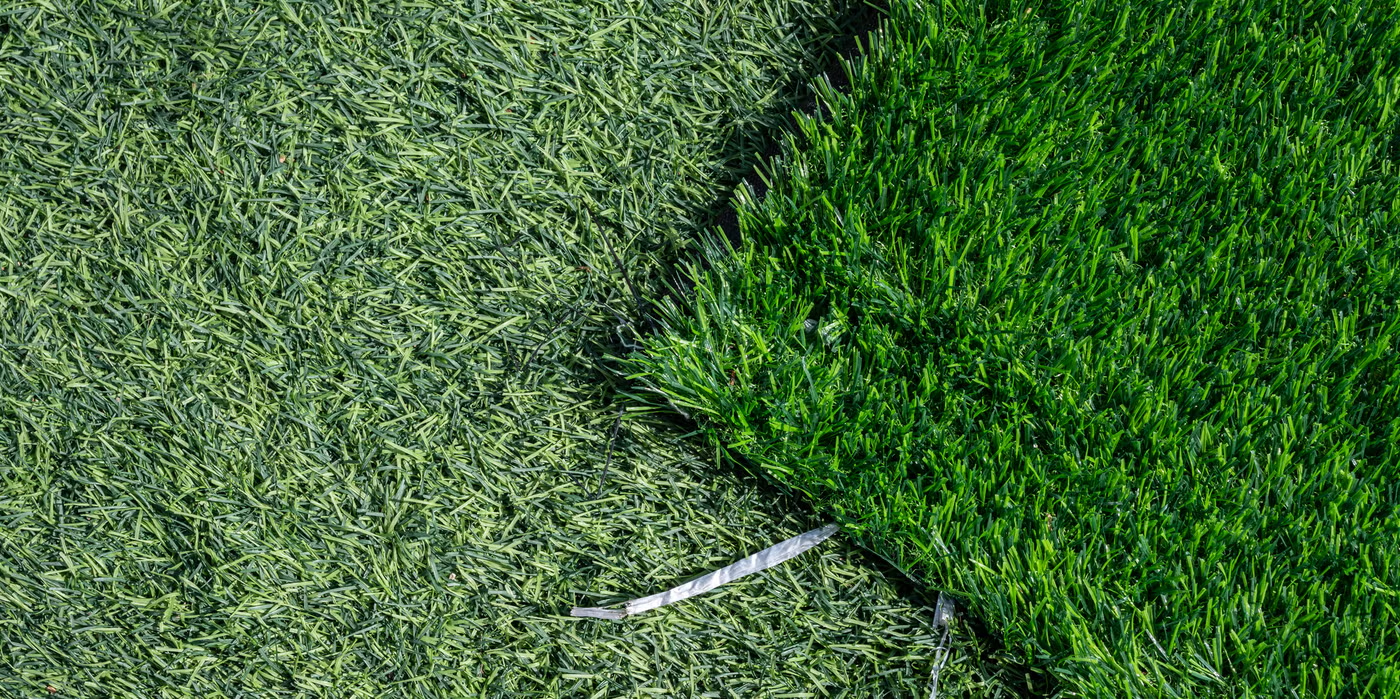
I’ve always thought using fake grass at home was super tacky. And I would never choose it over a real, lush lawn—after all, what makes sense for a mini-golf course looks downright strange on a residential property. Its green color looks obviously artificial, it feels scratchy underfoot, and on hot days it will give off that plastic smell. To me, it always felt like the landscaping equivalent of cheating.
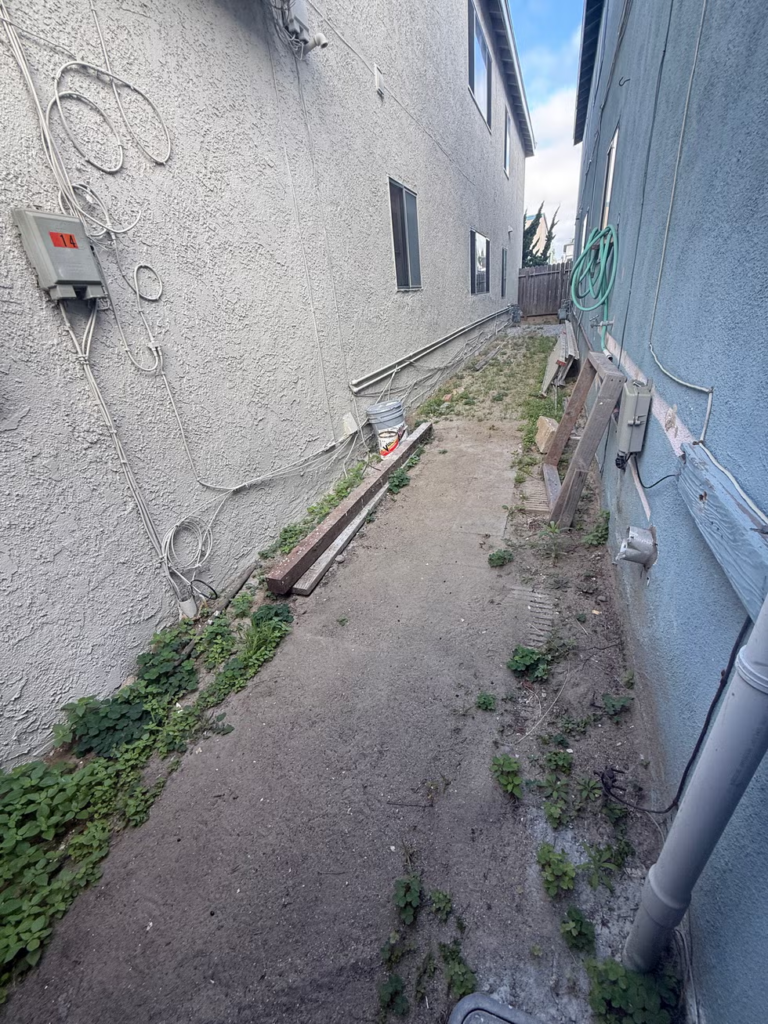
But then I inherited my own outdoor space where real grass was impossible to grow. Between my building and my neighbor’s sits a shared breezeway measuring roughly 60 feet long by six feet wide. Over the years, it’s transformed into an awkward corridor full of weeds, ladders, old paint cans, and forgotten odds and ends. Sure, I could have poured my time and money into trying to grow the perfect shade garden there—or cajoled my neighbors to pitch in. But between planting, watering, mowing, and tending to its upkeep, I knew it wasn’t realistic.
That’s when fake grass started to look like a very appealing solution.
More From House BeautifulA Glamping Tent Tucked in an Acres-Long Garden

Alexa Erickson Gage
Before: The neglected breezeway between my building and my neighbor’s.Alexa Erickson Gage
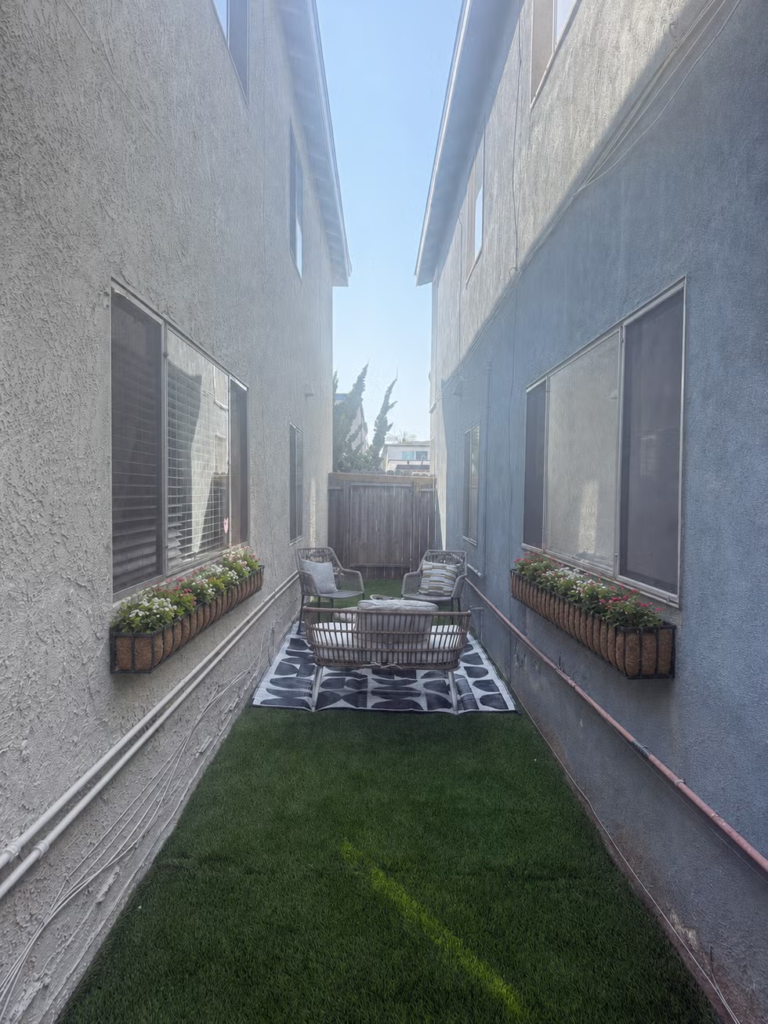
After: Adding fake grass (and some outdoor furniture) made this a place I actually want to spend time in.
No, I still don’t think it’s better than a lush, healthy lawn. But sometimes that isn’t the comparison. Sometimes the real choice is between installing artificial turf and putting up with a patch of dirt that’s slowly being overtaken by weeds.
If you’re dealing with a difficult outdoor space where no living thing seems to thrive—or if you know you’re simply not going to keep up with lawn maintenance—consider this your permission slip to use fake grass. Here’s why it works for me.
Advertisement – Continue Reading Below
Related Stories:
Designers Say to Avoid These Tacky Backyard Upgrades
The 40 Prettiest Flowers in the World
Everything to Know About “Gardenscaping”
It Rescues the Spaces Real Grass Struggles to Survive
Artificial turf is the saving grace of any awkward outdoor area on your property. Think narrow side yards, breezeways, tiny strips along fences, dog runs, or heavily shaded areas where grass constantly dies back.
These overlooked spaces often become muddy, weedy eyesores because they simply aren’t ideal environments for healthy turf. So, instead of constantly fighting nature, artificial grass gives these forgotten corners a finished, intentional look year-round.
It Eliminates the Constant Maintenance
Again, nothing beats a healthy, real lawn. But, as any landscaper will tell you, caring for or rehabilitating your grass takes time and effort. Plus, there are the ongoing expenses to consider: fertilizer, grass seed, replacement sod, and your water bill, just to name a few.
Using fake grass means you won’t have to mow every weekend, fertilize year-round, reseed bare patches, or adjust irrigation schedules each season. While artificial grass still benefits from the occasional rinse, brushing, or leaf cleanup, the maintenance is dramatically lower than caring for a traditional lawn.
Related Story
It’s a Practical Solution for Shared Spaces
Unless someone has a serious green thumb and a hankering to take on a never-ending project they’ll never get proper thanks for, shared outdoor areas often become neglected. That was exactly the case with my breezeway. Since multiple households use and have access to the space, it was difficult to coordinate who should water, mow, weed, or pay for landscaping.
Using artificial turf removes much of that ongoing maintenance, making it especially useful in duplexes, rental properties, HOAs, or anywhere responsibility is divided among multiple people with conflicting schedules. Plus, the turf can always be removed or replaced if the property ever changes hands.
You Don’t Have to Replace Your Entire Lawn
One of the biggest misconceptions about using artificial grass is that it has to take over your entire yard. I definitely disagree with this. In fact, I think it works best when it’s used strategically. Try it in a small, shady area or in a place with poor soil first, then decide if it’s even necessary to expand elsewhere.
Using artificial turf selectively allows you to enjoy the beauty of natural grass where it thrives while solving the problem areas where it doesn’t.
Leave a Reply